
Gymnase Tips is reader-supported. When you buy through links on our site, we may earn an affiliate commission at no extra cost to you.
TL;DR — Do Natural Menopause Treatments Actually Work?
Seven natural menopause treatments have meaningful research behind them: exercise, phytoestrogen-rich foods, cognitive behavioral therapy, black cohosh (short-term), sleep hygiene, trigger tracking, and acupuncture. Evidence ranges from strong (CBT for hot-flash bother, exercise for bone and mood) to modest (acupuncture). Below, each treatment gets an honest evidence grade so you know what “really works” actually means.
Table of contents
Evidence at a Glance — How We Grade These Natural Menopause Treatments
These grades reflect published systematic reviews and The Menopause Society’s (NAMS) 2023 nonhormone therapy position statement (Source: The Menopause Society, 2023). They are not personal opinion. “Strong” means multiple randomized controlled trials or meta-analyses support the claim. “Moderate” means some RCTs exist but results are mixed. “Low” means mostly observational data or inconsistent trial results.
| # | Treatment | Evidence Grade | Best For | Key Caveat | Primary Source |
|---|---|---|---|---|---|
| 1 | Exercise (aerobic + resistance) | Strong (bone, mood, sleep); Limited for hot flashes | Bone density, mood, sleep, weight | NAMS does not recommend for VMS specifically | NAMS 2023; Zhao et al. 2025 |
| 2 | Phytoestrogen-rich foods | Moderate | Hot flash frequency and severity | High heterogeneity across trials; caution with hormone-sensitive cancer | Taku et al. 2012 meta-analysis |
| 3 | CBT / CBT-I | Strong | Hot-flash bother, insomnia | Reduces bother and interference, not necessarily frequency | NAMS 2023 (Level I recommended) |
| 4 | Black cohosh | Low-Moderate | Hot flashes (short-term) | Rare liver damage reports; mixed RCT results | NCCIH; NAMS 2023 (not recommended) |
| 5 | Sleep hygiene + temperature | Moderate (clinical consensus) | Night sweats, sleep quality | Low-cost but not studied in large RCTs for VMS | Cleveland Clinic; NAMS 2023 |
| 6 | Trigger tracking | Low | Hot flashes, mood swings | Evidence is mostly observational | NAMS 2023 (not recommended) |
| 7 | Acupuncture | Low-Moderate | Hot flash frequency | No consistent advantage over sham acupuncture | Cochrane CD007410; NAMS 2023 |
One note on that table: NAMS 2023 specifically evaluates treatments for vasomotor symptoms (hot flashes and night sweats). Exercise ranks first here because menopause is far more than hot flashes. Bone loss, mood changes, weight gain, and poor sleep all respond well to regular training. That is why it leads.
1. Exercise — The Strongest Natural Menopause Treatment
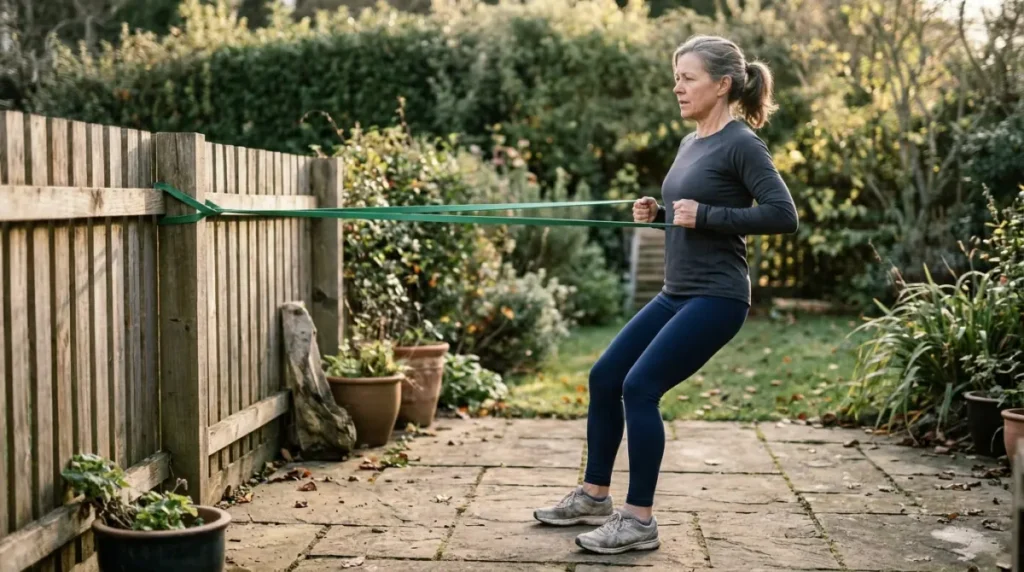
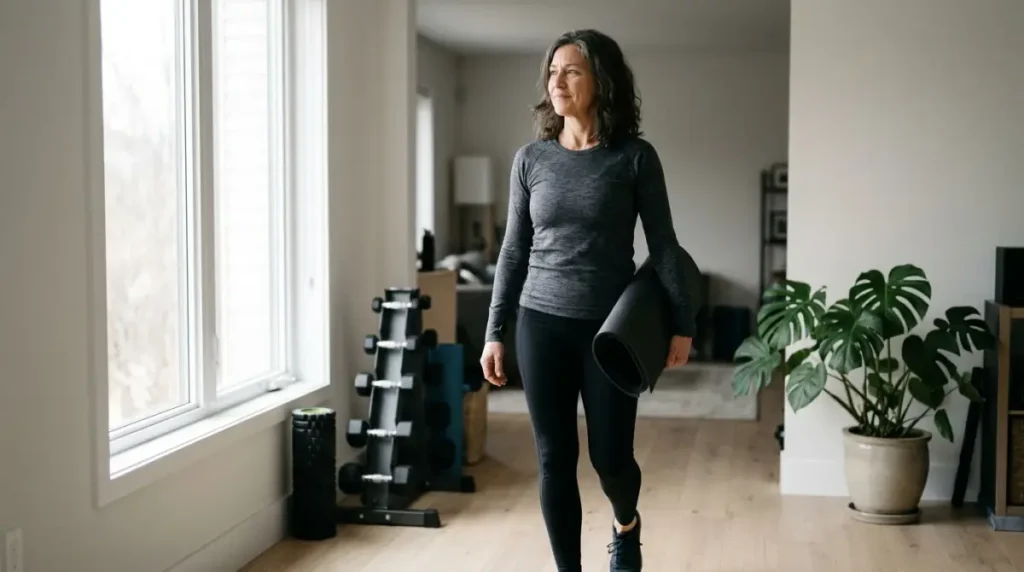
Regular exercise is the single best-supported natural approach for managing menopause as a whole. It protects bone density, improves mood and sleep, and helps control the weight gain that often accompanies declining estrogen. For hot flashes specifically, the evidence is more limited. NAMS 2023 classifies exercise as Level II (limited or inconsistent evidence) for vasomotor symptoms and does not recommend it as a VMS treatment (Source: The Menopause Society, 2023).
That distinction matters. Skip exercise because it won’t cure your hot flashes and you lose its benefits for everything else.
The minimum effective dose: at least 150 minutes of moderate-intensity aerobic activity per week, plus muscle-strengthening activities on two or more days (Source: U.S. Department of Health and Human Services, Physical Activity Guidelines for Americans, 2nd edition, 2018). For postmenopausal bone health, a 2025 meta-analysis of 17 RCTs (690 women) found resistance training significantly improved lumbar spine bone mineral density (SMD 0.88, 95% CI 0.21-1.56) and femoral neck BMD (SMD 0.89, 95% CI 0.40-1.39) (Source: Zhao et al., Journal of Orthopaedic Surgery and Research, 2025). High-intensity loading (at or above 70% of one-rep max) and interventions lasting 48 weeks or longer produced the clearest gains at the femoral neck and total hip (Source: Zhao et al., 2025).
Pelvic floor weakness is common during and after menopause. Kegel exercises or a referral to a pelvic-floor physical therapist can help, though that topic deserves its own coverage.
Which Exercise Helps Which Symptom?
Different symptoms respond to different exercise types. This table maps the connection.
| Symptom | Exercise Type | Minimum Dose | Evidence Note |
|---|---|---|---|
| Bone loss | Resistance training + impact loading (jumping, stair climbing) | 2-3 sessions/week, >=70% 1RM | Strong (Source: Mohebbi et al., Osteoporosis International, 2023; Zhao et al., 2025) |
| Mood and anxiety | Any regular exercise; resistance training may have an edge | 150 min/week | Strong, consistent across systematic reviews |
| Sleep disruption | Moderate aerobic (walking, cycling); avoid late-evening high-intensity | 150 min/week | Moderate, improved sleep quality in most trials |
| Weight gain | Resistance training + adequate protein | 2-3 sessions/week + dietary adjustment | Strong for body composition |
| Hot flashes | Aerobic exercise | 150 min/week | Limited per NAMS Level II, not recommended for VMS |
| Pelvic floor | Kegel exercises / pelvic-floor PT | Daily | Moderate, clinical consensus |
2. Phytoestrogen-Rich Foods May Reduce Hot Flashes
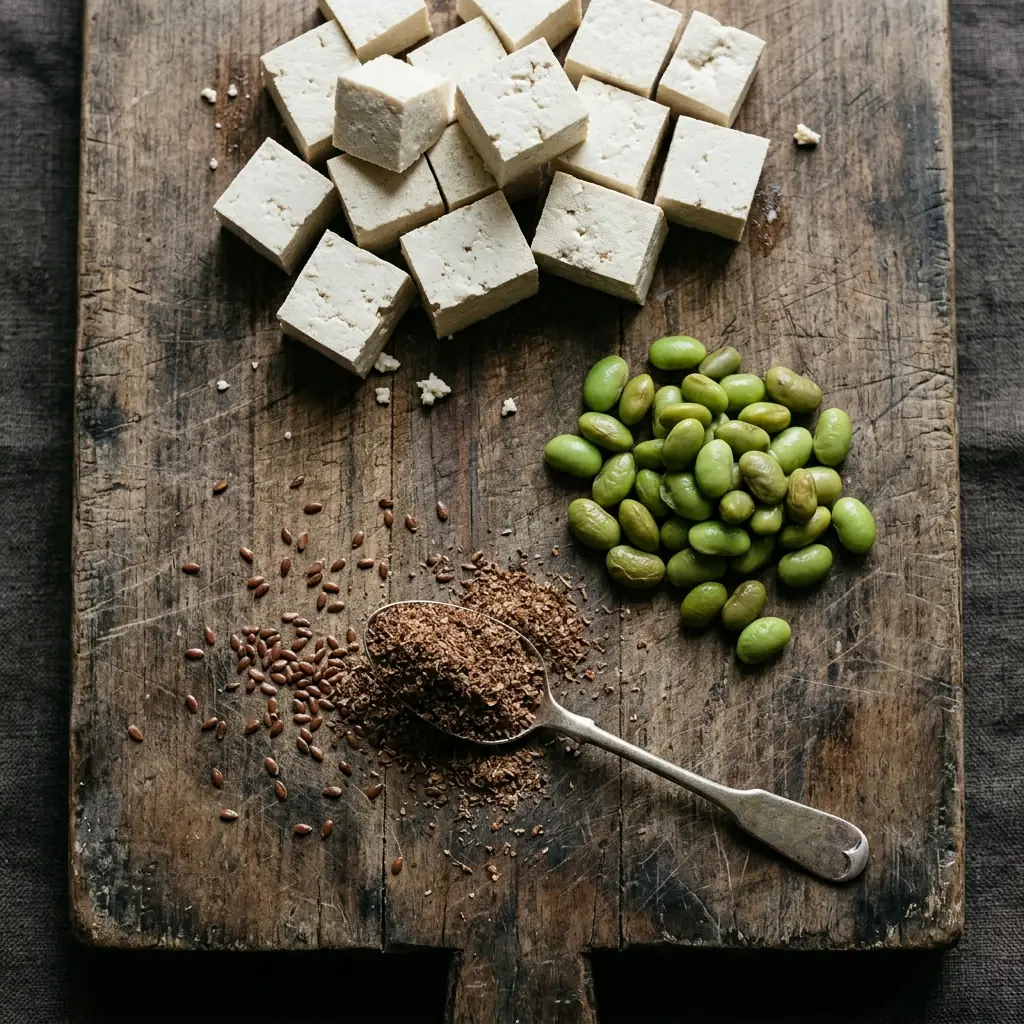
Eating roughly 54 mg of soy isoflavones daily (about two servings of tofu or edamame) is linked to a 20.6% reduction in hot flash frequency and a 26.2% reduction in severity compared with placebo, according to a meta-analysis of 17 RCTs (Source: Taku et al., Menopause, 2012). The effect is real but modest. Heterogeneity across trials was high (I-squared = 67% for frequency), and the NAMS 2023 position statement does not recommend soy foods or soy extracts for vasomotor symptoms (Source: The Menopause Society, 2023).
So why include them? Because the risk is low, the dietary pattern has broader health benefits, and some women do respond. Japanese women report significantly fewer hot flashes than their Western counterparts. A prospective study of 1,106 women in Takayama, Japan, found that those in the highest third of soy intake had a 58% lower risk of moderate-to-severe hot flashes compared with the lowest third (HR 0.42, 95% CI 0.25-0.72) (Source: Nagata et al., American Journal of Epidemiology, 2001). Genetics and lifestyle differences beyond diet likely play a role, but the dietary soy hypothesis has held up across multiple cross-cultural analyses.
Food sources to prioritize (approximate isoflavone content from USDA data):
- Tofu (soft, 3 oz / 85 g): ~20 mg isoflavones
- Edamame (boiled, 1/2 cup): ~16 mg
- Tempeh (cooked, 3 oz / 85 g): ~30 mg
- Ground flaxseed: contains lignans (a different class of phytoestrogen), though controlled trials have not found flaxseed outperforms placebo for hot flashes (Source: Pruthi et al., Menopause, 2012)
(Source for soy values: Linus Pauling Institute, Oregon State University, citing USDA Database for the Isoflavone Content of Selected Foods, Release 2)
Focus on whole soy foods over soy isoflavone supplements for this post. Supplements get fuller coverage in our perimenopause supplements guide.
Safety note: If you have a history of hormone-sensitive cancer (breast, uterine, or ovarian), talk to your oncologist before increasing phytoestrogen intake. The NCCIH notes that phytoestrogens “may not be safe for women who shouldn’t take estrogen” (Source: NCCIH, 2017).
3. CBT and Mind-Body Practices for Sleep and Mood
Cognitive behavioral therapy for insomnia (CBT-I) is the most evidence-backed mind-body approach for menopause sleep problems. NAMS 2023 gives CBT a Level I recommendation for reducing the bother and interference caused by hot flashes and night sweats, one of only a handful of nonhormone therapies to earn that grade (Source: The Menopause Society, 2023).
CBT does something different from what most people expect. It does not necessarily reduce how many hot flashes you have. It changes how much they disrupt your life. In the MENOS 1 trial (breast cancer survivors with menopausal symptoms), group CBT reduced hot-flash problem ratings by about 50% at 26 weeks, compared with roughly 25% in the usual-care group (Source: Mann et al., The Lancet Oncology, 2012). For insomnia specifically, a randomized trial of 106 menopausal women found that telephone-delivered CBT-I brought 70% of participants (33 of 47) to no-insomnia severity scores after 8 weeks, versus 24% (10 of 41) in the control group (Source: McCurry et al., JAMA Internal Medicine, 2016). By 24 weeks, that figure climbed to 84%.
A 2025 meta-analysis of 11 RCTs found CBT-I significantly improved sleep quality (n=795; SMD -1.01, 95% CI -1.27 to -0.75) and reduced insomnia severity scores by 4.49 points (n=504; MD -4.49, 95% CI -6.12 to -2.87) (Source: Moon et al., Women’s Health Nursing, 2025).
Yoga and meditation have moderate evidence for menopause-related stress and mood, but the data for hot flashes is weaker. A 2018 systematic review and meta-analysis of 13 RCTs (1,306 women) found yoga reduced both physical and psychological menopause symptoms, though the effect was comparable to other exercise interventions, and the NAMS 2023 statement does not recommend yoga for vasomotor symptoms specifically (Source: Cramer et al., Maturitas, 2018; NAMS, 2023). Mindfulness meditation may reduce the perceived bother of hot flashes without changing their frequency.
If you pursue CBT-I, look for a therapist trained in CBT for insomnia or use a validated digital CBT-I program. Access remains the biggest barrier. Ask your doctor for a referral.
4. Black Cohosh — Short-Term Use, Mixed Evidence
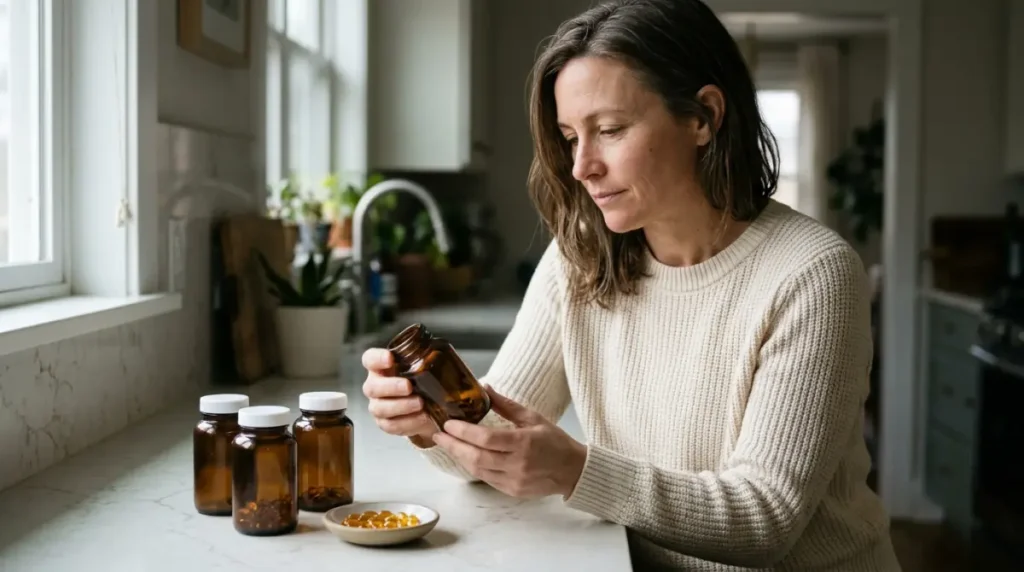
Black cohosh (typically taken at 40-80 mg/day of standardized extract) may ease hot flashes short-term, but the evidence is genuinely mixed and comes with safety considerations you should not ignore. NAMS 2023 places herbal supplements, including black cohosh, in the “not recommended” category for vasomotor symptoms (Source: The Menopause Society, 2023). A 2023 review of 22 studies found black cohosh “potentially beneficial for overall menopause symptoms” with improvements in hot flashes but not anxiety or depressive symptoms (Source: NCCIH, 2024).
The contradiction is the point. Some women report clear benefit. The aggregate data says the effect is inconsistent.
Safety: The NCCIH states that “cases of liver damage, some very serious, have been reported in people taking products labeled as black cohosh,” though “these problems are rare, and it’s uncertain whether black cohosh was responsible” (Source: NCCIH, 2024). Some commercial products tested by NCCIH contained the wrong herb entirely or undisclosed ingredient mixtures, which may explain some adverse reports. If you try black cohosh, choose a product with USP or NSF third-party verification. Stop immediately and see a doctor if you develop dark urine, unusual fatigue, or abdominal pain.
It is also uncertain whether black cohosh is safe for women with a history of hormone-sensitive conditions such as breast or uterine cancer (Source: NCCIH, 2024).
For a deeper comparison of menopause supplement options, see our perimenopause supplements guide.
5. Sleep Hygiene and Bedroom Temperature
Keeping your bedroom between 60-67 degrees F (15-19 degrees C), wearing moisture-wicking layers, and holding a consistent sleep-wake schedule are low-cost changes that reduce night-sweat severity and improve sleep quality during menopause. The Cleveland Clinic recommends a bedroom temperature of 60-67 degrees F for sleep (Source: Cleveland Clinic).
These changes will not eliminate hot flashes. They make them less disruptive. NAMS 2023 classifies cooling techniques as Level II (limited evidence) and does not recommend them as a standalone VMS treatment (Source: The Menopause Society, 2023). That said, nearly every sleep specialist and menopause clinician suggests them as a baseline.
Practical checklist:
- Set your thermostat to 60-67 degrees F (15-19 degrees C) at bedtime
- Use moisture-wicking sleepwear and bedding
- Keep a cooling pillow or a small bedside fan within reach for nighttime flashes
- Hold the same wake time every day, including weekends
- Cut screen use 30-60 minutes before bed (blue light suppresses melatonin)
- Avoid heavy meals and alcohol within 2-3 hours of sleep
If insomnia persists despite these steps, CBT-I (section 3 above) is the evidence-based next move, not sleep medication.
6. Tracking Triggers — Caffeine, Alcohol, and Spicy Food
Identifying personal triggers through a symptom diary is a low-risk way to reduce hot flashes and mood swings, though the evidence behind specific triggers like caffeine is mostly observational. NAMS 2023 classifies trigger avoidance as Level II, not recommended for VMS (Source: The Menopause Society, 2023). That does not mean it is useless. It means the data comes from self-report surveys and epidemiological studies, not controlled trials.
Commonly reported triggers include:
- Caffeine (especially after noon)
- Alcohol (even moderate amounts)
- Spicy food
- Hot beverages
- High ambient temperatures
- Acute stress
Here is what actually helps: keep a simple diary for two to four weeks. Write the time, what you ate or drank, your stress level, and whether a hot flash or mood shift followed. Patterns emerge quickly. One woman’s trigger is another’s non-issue, which is exactly why population-level studies struggle to show a consistent effect.
7. Does Acupuncture Help Menopause Symptoms?
Some randomized trials show acupuncture modestly reduces hot flash frequency compared to no treatment, but it does not consistently outperform sham (fake) acupuncture. A Cochrane review on acupuncture for menopausal hot flashes included 16 RCTs (1,155 women overall). In the subset comparing real versus sham acupuncture (8 RCTs, 414 women), there was no significant difference in hot flash frequency (MD -1.13 flashes/day, 95% CI -2.55 to 0.29) (Source: Cochrane, 2013). Acupuncture did appear to reduce severity by a small amount (SMD -0.45). NAMS 2023 does not recommend acupuncture for vasomotor symptoms (Source: The Menopause Society, 2023).
The honest read: if you have already tried exercise, dietary changes, CBT, and sleep adjustments, and hot flashes still bother you, acupuncture is a reasonable low-risk addition. It is not a first-line treatment.
What About Red Clover, Evening Primrose, and Ginseng?
Red clover, evening primrose oil, and ginseng lack consistent evidence for menopause symptom relief in systematic reviews. None earned a place in the top seven.
Red clover contains isoflavones similar to soy. A 2021 meta-analysis of eight trials found a statistically significant but modest reduction in daily hot flushes (WMD -1.73 per day, 95% CI -3.28 to -0.18), with very high heterogeneity (Source: Kanadys et al., Nutrients, 2021). Overall, the evidence is not strong enough to recommend red clover as a reliable treatment.
Evening primrose oil showed no statistically significant reduction in hot flash intensity in a 2025 systematic review and meta-analysis pooling two RCTs for this outcome (SMD -0.19, 95% CI -0.45 to 0.08) (Source: Larki et al., Journal of Caring Sciences, 2025).
Ginseng may improve mood in some women, but evidence for hot flash reduction is absent.
St. John’s wort deserves a specific warning rather than a recommendation. The NCCIH states it “can interact in dangerous, sometimes life-threatening ways with a variety of medicines,” including antidepressants, birth control pills, and blood thinners (Source: NCCIH, 2024). It is covered in the safety section below, not here.
For deeper coverage of supplement options and dosing, see our perimenopause supplements guide.
Safety First — Drug Interactions and Warnings You Need to Know
Several popular menopause supplements carry serious drug interactions or safety risks that most wellness sites skip entirely. This table consolidates the warnings in one place.
| Supplement / Approach | Risk | Who Is Affected | What to Do | Source |
|---|---|---|---|---|
| Black cohosh | Rare but serious liver damage reported | Anyone; higher concern with existing liver conditions | Choose USP/NSF-verified products; stop if dark urine, fatigue, or abdominal pain appears | NCCIH, 2024 |
| St. John’s wort | Induces cytochrome P-450 enzymes and P-glycoprotein, reducing effectiveness of many drugs | Users of SSRIs, birth control pills, warfarin, cyclosporine, HIV meds | Do not combine without physician approval; serotonin syndrome risk with antidepressants | NCCIH, 2024 |
| Phytoestrogens (soy, red clover) | Estrogen-mimicking effects | Women with hormone-sensitive cancer history (breast, uterine, ovarian) | Consult oncologist before increasing intake | NCCIH, 2017 |
| Any herbal supplement | Contamination, mislabeling, undisclosed ingredients | All supplement users | Look for USP or NSF International verification on the label | NCCIH, 2024 |
Three rules apply to every supplement on this list:
- Tell your doctor what you take. “Natural” does not mean free of drug interactions.
- Buy only third-party tested products (USP, NSF, or ConsumerLab verified).
- More is not better. Stick to studied doses and durations.
When Natural Treatments Are Not Enough
If menopause symptoms disrupt your sleep, work, or relationships despite the lifestyle changes above, prescription options exist and work well. Hormone therapy remains the most effective treatment for vasomotor symptoms. For women who cannot or prefer not to use hormones, the FDA approved fezolinetant (Veozah) in May 2023 as the first nonhormonal neurokinin 3 receptor antagonist for moderate-to-severe hot flashes (Source: FDA, 2023). Note: the FDA added a boxed warning to Veozah in December 2024 for rare but serious liver injury; liver function tests are required before starting and periodically during treatment (Source: FDA Drug Safety Communication, 2024). SSRIs and SNRIs also have Level I evidence for vasomotor symptoms per NAMS 2023 (Source: The Menopause Society, 2023). Our menopause timeline and treatment guide covers prescription options, timelines, and when to talk to your gynecologist.
Frequently Asked Questions
What are the best natural menopause treatments?
No single natural remedy outperforms regular exercise for overall menopause symptom management. For hot flashes specifically, soy isoflavones (~54 mg/day from food) have the most dietary evidence. Black cohosh may help short-term, but results are mixed. The strongest single nonhormone intervention for hot-flash bother is CBT, which is a therapy rather than a supplement.
How can I survive menopause without HRT?
Combine regular exercise (150 min aerobic + 2 resistance sessions/week), a phytoestrogen-rich diet, CBT-I for sleep problems, trigger management, and bedroom temperature control. Most women find symptom relief with this layered approach. If symptoms remain severe, non-hormonal prescriptions like fezolinetant exist (with required liver monitoring). See your doctor to discuss all options.
Can you naturally slow down menopause?
No. Menopause timing is largely genetic, and no supplement, food, or exercise program can delay it. What you can do is manage symptoms effectively with the treatments above. “Slowing menopause” is a myth that supplement marketers exploit. Symptom management is real and well-supported by research.
Why do Japanese women have fewer menopause symptoms?
Higher dietary soy intake is the leading hypothesis. Older Japanese adults consume approximately 25-50 mg of isoflavones daily from foods like tofu, miso, and edamame (Source: Messina et al., Nutrition and Cancer, 2006). A prospective study of 1,106 Japanese women found those with the highest soy intake had a 58% lower risk of moderate-to-severe hot flashes (Source: Nagata et al., American Journal of Epidemiology, 2001). Genetics, lifestyle factors, and cultural differences in how symptoms are reported also contribute.
What fruits are good for menopause?
Berries (blueberries, strawberries) provide antioxidants that support cardiovascular health during estrogen decline. Citrus fruits supply vitamin C, important for collagen maintenance. Dried apricots contain small amounts of phytoestrogens. No fruit is a standalone menopause treatment, but a diet rich in colorful produce supports overall health during the transition.
Sources
- NCCIH. “Black Cohosh.” National Center for Complementary and Integrative Health. Updated November 2024. nccih.nih.gov
- NCCIH. “Menopausal Symptoms: In Depth.” National Center for Complementary and Integrative Health. nccih.nih.gov
- Cochrane. “Acupuncture for menopausal hot flushes.” Cochrane Database of Systematic Reviews, CD007410. cochrane.org
- FDA. “FDA adds warning about rare occurrence of serious liver injury with use of Veozah (fezolinetant).” Drug Safety Communication, September 2024; Boxed Warning added December 2024. fda.gov
- U.S. Department of Health and Human Services. Physical Activity Guidelines for Americans, 2nd edition. 2018. health.gov
Key sources shown. Every other study is named inline where it is cited.

Pingback: Best Perimenopause Supplements (2026): Graded by Evidence
Pingback: Perimenopause vs Menopause vs Postmenopause: 3 Stages Explained